- INJ is testing a key Fibonacci resistance after a sharp rebound from its early November low.
- Nasdaq approved the listing of Canary Capital’s Staked INJ ETF.
- The fund stakes most of its INJ, but fees take a large share of the rewards.
- An overbought RSI and an unresolved death cross leave the rally unconfirmed.
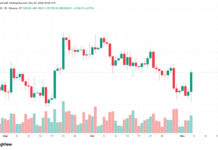
The first Injective ETF in the US has won Nasdaq listing approval, and INJ has climbed roughly 22% since bottoming at $6.82 on November 3 to trade near $8.30 on Thursday. Canary Capital’s Staked INJ ETF, ticker INJC, is designed to hold INJ and stake most of it for additional tokens. The rebound has carried the price straight into the 0.618 Fibonacci retracement at $8.43, a level INJ has not closed above since the sell-off of October 22, which makes it the first real test of how much follow-through the listing can generate.
BREAKING: The NASDAQ has officially approved the listing of the first-ever INJ Staked ETF.
The ETF will bring unprecedented exposure to $INJ and will target staking 90% of its institutional holdings in the U.S.
The ticker is INJC. pic.twitter.com/Rb4HhOY29K
— Injective
(@injective) November 5, 2026
Sellers Wait at $8.43
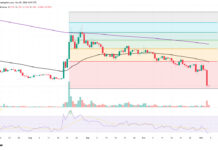
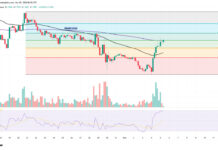
The Fibonacci grid on the four-hour chart runs from the $9.42 swing high of October 21 down to the $6.82 low, and INJ has cleared the 0.236, 0.382 and 0.5 levels in under two days. The latest candle reached $8.46 before slipping back to $8.31, leaving an upper wick above the 0.618 line. Put simply, buyers touched the resistance but could not hold it on the first attempt, which happens often on a first test and only becomes meaningful once a four-hour candle actually closes above $8.43.

A confirmed close there would put the 0.786 retracement at $8.86 in reach, with the $9.42 high, where the late-October decline began, as the next reference above it. A rejection would most likely send the price back to the $8.12 midpoint, which switched from resistance to support during Wednesday’s climb. Losing that floor would bring $7.81 back into play.
| Level | Price | Role |
|---|---|---|
| 0.786 Fibonacci | $8.86 | Next target after a breakout |
| 0.618 Fibonacci | $8.43 | Resistance being tested now |
| 0.5 Fibonacci | $8.12 | First support |
| 50/200 EMA zone | $7.55-$7.61 | Deeper support |
The Death Cross Came Late
The moving averages lag the price here. The 50-period EMA slipped below the 200-period EMA around November 1, the crossover traders call a death cross, but by then most of the decline had already happened. INJ now trades about 9% above both lines, with the 50-period average at $7.55 and turning higher while the 200-period average sits at $7.61. The gap between them is narrow enough that a few more sessions of higher prices could reverse the crossover, but until that happens the averages have not confirmed a new uptrend.
Momentum looks stretched. The 14-period RSI reads 74.6, which means gains have dominated the last fourteen four-hour candles, roughly the past two and a half days, to an unusual degree. The last time the reading went this high, in mid-October, INJ stalled near $9.40 and spent the following week drifting lower. Volume is the weaker part of the setup: the breakout bars on November 4 drew more trading than the prior week’s average, but nothing close to the spikes recorded during the October 16 rally. The breakout also coincided with a broader market recovery that put Bitcoin back above $80,000, so part of the move reflects risk appetite across crypto rather than the listing alone.
What Nasdaq Signed Off On
Canary signed a Form 8-A with the SEC on November 3, stating that Nasdaq had received and approved its application to list shares of the Canary Staked INJ ETF. The filing came a day after Amendment No. 5 to the fund’s S-1 registration, and the final prospectus followed on November 4, the date Canary’s product site lists as the fund’s inception. Exchange approval to list is a separate step from SEC registration of the product, and the 8-A does not mean the regulator has endorsed the fund as an investment.
The fund charges a 1.10% annual sponsor fee and expects to stake at least 90% of its tokens under normal conditions, keeping the remainder as a buffer for redemptions and expenses. BitGo Bank & Trust holds the INJ, Luganodes runs the staking and U.S. Bank keeps the cash. The net asset value (NAV), meaning the per-share value of everything the fund holds, is set from a 60-minute New York reference rate built on trading across major INJ markets. According to the registration statement, the Injective Foundation has committed to a seed purchase of up to $15 million in shares, paid in INJ.
The listing closes a process that ran for well over a year and included one false start on another exchange.
Why Holders Keep Less Than the Yield
Staking on Injective works through delegation: token holders assign INJ to validators, the operators that confirm transactions and produce blocks, and the network pays out newly issued INJ in return. Canary will not distribute those rewards to shareholders. Net rewards stay inside the fund and lift its NAV, so investors only see the benefit through the share price.
A sizeable cut comes off first. The prospectus expects 30% of gross staking rewards to go to fees shared by the sponsor, the staking provider and the custodian, on top of the 1.10% annual fee. Assuming a hypothetical 10% gross reward rate, the math works out as follows:
| Component | Annual effect |
|---|---|
| Gross staking rewards | 10.0% |
| 30% of rewards paid as fees | -3.0% |
| Annual sponsor fee | -1.10% |
| Approximate net for shareholders | 5.9% |
Illustrative only, assuming full staking and flat prices.
Two operational limits sit behind those numbers. Unstaking INJ takes 21 days, during which the tokens earn nothing and cannot be moved, so a wave of redemptions would push Canary to draw on its unstaked reserve. Validators can also be penalized through slashing, where the network confiscates part of the staked tokens for downtime or misconduct, and any such loss would fall on the fund.
Creations Are the Number to Watch
Because INJC holds physical INJ, every new block of shares created by an authorized participant, the large trading firms that deal directly with the fund, requires the fund to acquire tokens, while redemptions work in reverse. That makes daily shares outstanding a more useful signal for INJ holders than the listing headline. Canary’s product page still showed zero values for assets and yield in its first snapshot, so no inflow figures exist yet. If the fund does grow, it would become a sizeable delegator on Injective, adding to the share of supply locked in staking and unavailable for exchange selling for at least three weeks at a time.
Europe offers the closest reference point. 21Shares has listed its staked AINJ product since 2024, and its asset base gives a rough benchmark for the scale of demand a regulated INJ wrapper has drawn so far. For INJC, the comparison that will matter over the coming months is the fund’s staking-adjusted return against plain spot INJ, which will show whether the reward stream justifies a fee load of 1.10% plus 30% of everything the validators earn.